Hello Friends: A French Restaurateur Finds Home on a Nishiogi Corner
Updated: Jun 29

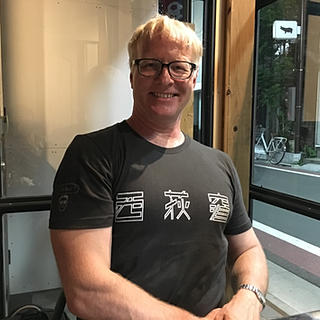
On the corner of a small street about a seven-minute walk from Nishi-Ogikubo Station, on the way toward Women’s Christian University, sits Bonjour les amis, a sixteen-seat French restaurant with a family atmosphere that opened in February 2025. It is easy to recognize: a hand-painted Frenchman in a suit, beret on his head, holds a bottle and a glass of wine inside a heart-shaped storefront. The owner, Yoann Rohart — or “Yo” to his friends — is a Frenchman in his early forties from Bonneuil-sur-Marne, “the Paris suburbs, the 94 area, in Bonneuil, right next to Créteil,” as he insists on specifying. Trained as an interior designer, he worked for several years in Bordeaux selling building materials before deciding to settle in Tokyo. He runs the restaurant alone — cooking, serving, washing up, managing — and is just as likely to greet you at the window with a wave as to call you in for a coffee, a glass of wine, or just a chat. We met him for the first time over dinner at his counter; the second meeting, an afternoon interview, began around two and stretched past four. He moved around the room as he talked, fetching his recipe book at one point, and sometimes the chronology of his story doubled back on itself, as good stories tend to.
From Paris to Japan: a story of cultural fascination
The story that led Yoann to Japan, intriguingly, started in a Chinese restaurant. As a child in the Paris suburbs, his family had a monthly ritual: “I come from Bonneuil-sur-Marne, and with my parents we had this thing where every month we went to eat at a Chinese restaurant. And there was a waiter who, every time, would tell me about how things were in China, etc. So I think that was one of my first connections with Asia. Although I also had Japan through anime and things like that, through Club Dorothée. But I really think that he planted that idea in my head.”
The waiter, then, was his first ambassador of Asia, feeding a curiosity that television — Le Club Dorothée, the afternoon program that introduced French children of the 1980s and 90s to Japanese animation — had already begun to seed. The childhood imagination would develop into a travel bug. He started young: “I started traveling when I was old enough, very early, actually. As soon as I turned 18, I started traveling around Europe, in nearby countries. Then I moved to Bordeaux when I was 25.” After Europe, he wanted “to see something other than European culture,” and the route led, perhaps inevitably, to Asia. Thailand came first. He went with his then-girlfriend for four weeks — Bangkok, Krabi, Koh Lanta — and loved it enough that he returned with his younger brother, his cousin, and his best friend. By the time a third trip was on the horizon, the appetite had ebbed: “going to Thailand a third time didn’t excite me that much.” He began considering Japan: “I thought, ‘Why not Japan?’ At that time, people weren’t talking about it that much yet, but it also wasn’t 20 years ago” — that is, around 2016 or 2017, before the wave of French Japanophilia of the late 2010s.
His first arrival in Tokyo was a disappointment: “I was used to Thailand and its atmosphere, you know, very urban, food almost cooked on the ground, very street-food style. And when I arrived here, I thought, "there are only buildings, etc." I thought, 'okay…'”
The conversion came overnight: “Actually, the next day I changed my mind. […] I really like Thailand, but I didn’t necessarily enjoy my interactions with Thai people. With the Japanese, everyone I met was really cool with me. The food, the cleanliness, the respect — it clicked right away. And as the days and weeks went by, it confirmed what I thought: yes, it was Japan.”
Over the next decade, he returned ten or eleven times: “We went to Okinawa, Zamami, Hiroshima, Kobe, Osaka, Nikko… basically the big cities.” Each return to France felt thinner than the last: “I missed it so much that several times, when I got back to France, I put my suitcases down and immediately booked my next trip. I mean, I bought my plane ticket while my suitcase was still sitting there unopened. I swear. It really was… yeah, an addiction. Some people, it’s alcohol or cigarettes. For me, it was just Japan, Japan, Japan. It’s crazy.”
Japan became a career trajectory. From 2019 to 2024 Yoann worked at a building-materials chain store, where he sold construction supplies at a counter in Bordeaux. He had liked the work but decided to give his resignation and explore new job perspectives. The path to Japan was at least in part opened by an unhappy work experience in France. He arrived in Japan in August 2024 with a sufficient budget and a clear constraint: “I didn’t want to come empty-handed. […] And when I arrived here, I didn’t want to work for a Japanese company, no offense.”
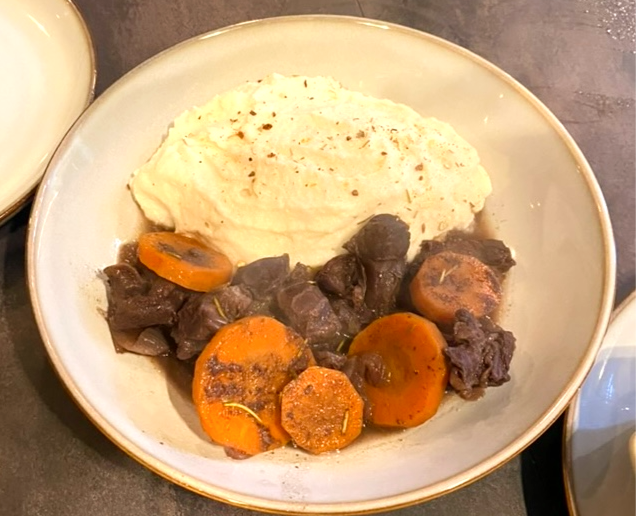
Working for others in France had proven that salaried employment was not the right fit for him, and he didn’t want to relive that experience in Japan. Self-employment was thus the only viable plan. What that project should be was settled almost as quickly as the geography. Yoann had always cooked at home and for friends, and he had eaten enough French food in Tokyo by then to develop a critique: “I’d eaten in French restaurants in Japan before — some are very good. There are really great ones here. But every time they changed something to adapt the dish to Japanese tastes. […] For example, beef bourguignon. They make it… well, not exactly the same. I don’t know what they add in the sauce, but it doesn’t taste like wine sauce. Maybe they add something else.”
His countervailing model was domestic and unpretentious — family food: “I really wanted to make a restaurant with my family dishes, the ones I grew up with at my mother’s or grandmother’s house. I didn’t want to do a quasi-gourmet restaurant with a tiny piece of meat and a flower petal on top and ‘that’s French.’ French food, when you eat at your grandmother’s or your parents’, you get a real plate, it’s tasty, there’s plenty of it. You don’t have petals on the plate. So I wanted a family-style restaurant where I could welcome friends and new customers and do things together.”

From Mémé Nenette’s cookbook to the Nishiogi corner
The grandmother in question, Mémé Nenette, occupies a small archive in the kitchen. Asked whether the recipes are his own or family ones, Yoann answers: “Let’s say it’s a mix. The base is my family’s recipes, but like everyone else, you always add a little ingredient or remove one. So originally it’s family recipes.”
He then produces a notebook — but not in his own hand. His mother had transcribed her own mother’s recipes into a book he now keeps in the restaurant. “I think it comes from my mother and my grandmother. On Wednesdays, I didn’t have school, and my mom worked, so I would go to my grandmother’s house. When I arrived there in the morning at 9 a.m., it already smelled like ratatouille. She was already making ratatouille and everything. I was lucky that both my grandmother and my mother always cooked. So I was always behind them watching what they were doing.”
In Tokyo, the recipes have to be modified mostly on the supply side. “I’ll look on Amazon, I’ll go to Kaldi, I’ll go to Seiyu, I’ll go to OK… It’s complicated, but I find them.” Sometimes the modification is quietly assertive — the apple pie, for instance, which the family book lists with a jar of applesauce as a base: “Here I see that, for example, she writes a jar of applesauce. I prefer to make the applesauce myself. […]It has a real apple taste. But it’s funny because my mom came here in April. […] She tasted the food. And there was a customer who speaks French who said, ‘Oh, is it like at home?’ And she said, ‘No, it almost tastes the same but he changed something.’“
His mother visited for several weeks in April and “came every day to eat, so it must have been good.”
The menu reads as a kind of crowd-pleasing inventory of recognizable French dishes ranked by Japanese familiarity: “Easy. I picked the most popular dishes in France. So boeuf bourguignon is quite well known. Quiche — Japanese people love quiche. You see ‘quiche, quiche, quiche’ everywhere, and they know the word. Then raclette — it’s cheese, and they like melted cheese. So I put raclette, Savoyard fondue, and then I added a few less well-known things like poulet basquaise and escargots.”
Quiche and hachis parmentier sell the most, poulet basquaise the least. (“It’s chicken, tomato, bell pepper… It’s not something extraordinary. Whereas with boeuf bourguignon, a wine sauce isn’t very common in Japan.”) Snails are the wildcard: customers often order them out of curiosity and end up enjoying them. “I feel like I’m the only one who doesn’t like them,” Yoann jokes. He sources them from a French importer that ships them with the shells, which costs more but produces, in his words, “proper snails.”
Setting up the restaurant required, in addition to the lease and the renovation, a separate ordeal of paperwork — including, unexpectedly, the cat. Asked about the administrative procedures of moving, his first example is feline: “It’s a nightmare. A big nightmare. Because, for example, he wasn’t microchipped. So I had to put a chip in him, but it had to be a specific type with a number starting with a certain sequence. I also had to vaccinate him against rabies, but there had to be two vaccines. […] Then he had to be tested, then you fill out the paperwork and send it to the airport customs, and they send you a document back. It’s a thing… I think it’s almost the longest process I’ve ever done.”

Securing the place: a love at first sight
The choice of Nishi-Ogikubo was not preordained. When he first arrived in Tokyo Yoann lived in Matsunoki, a residential area south of Shin-Koenji, and the neighborhood didn’t fit: “It’s a very residential area — just small houses. There might be one bar. The one time I went there, people looked at me like ‘he’s lost, what is he doing here?’ It’s strange. There’s a yakitori restaurant but that’s about it. There are also a lot of elderly people there. So I didn’t see myself opening my restaurant there.”
The search took him along the Chuo Line. Koenji and Nakano he already knew; Ogikubo, when he tried it, didn’t appeal. The discovery of Nishi-Ogikubo happened, in the way of so many Nishiogi encounters, by chance: “That was around October. I was calling friends to give them news, and I was talking to one friend for about an hour while walking around without really knowing where I was going. When I hung up it was about 8 p.m., and I was in Nishi-Ogikubo. All the izakayas were open. The atmosphere was really cool — very vintage, retro. People came up to me right away and asked where I was from. So I thought, ‘I’ll stay here.’ I returned to Matsunoki, and two weeks later I found this place. Two weeks after that I had my apartment.”
The “love at first sight” he attaches to the location is not only neighborhood-level but very specifically about the corner that now houses the restaurant. He had spotted a closing notice on the window in October 2024, called the agency, and was given an initial showing. “The first time I visited was very quick. The second time there were several real estate agencies there — five groups, I think. Each group went inside one after another to see the place. When I went in, I greeted the person working there. He was very welcoming, so we chatted a bit. Later, I found out he was actually the owner, but I didn’t know that at the time. After the visit everyone went outside, but the window was open and I kept talking with him a bit.”
In the field of competing applicants, this small unstaged friendliness mattered: “Maybe that helped a little — I was the only one talking to him. But it was just small talk, very basic Japanese: ‘How are you? Is business good here?’ Maybe it made a difference. He’s Taiwanese too, so maybe he liked the idea that it would be something other than Japanese cuisine taking over the place. Maybe he thought the concept of French cuisine was cool. But honestly, when I saw the façade of the restaurant I already had my idea in mind. I knew what I wanted to do. I really wanted this place and I did what I had to do to get it. […] I really wanted to be in Nishiogi, and I loved the corner location. Before that I visited places in Shin-Nakano and elsewhere, but there was always something wrong: the lease was too short, or I didn’t like the location. Here everything suited me. I thought if I let it go, I would never find another place that gave me the same ‘love at first sight.’“
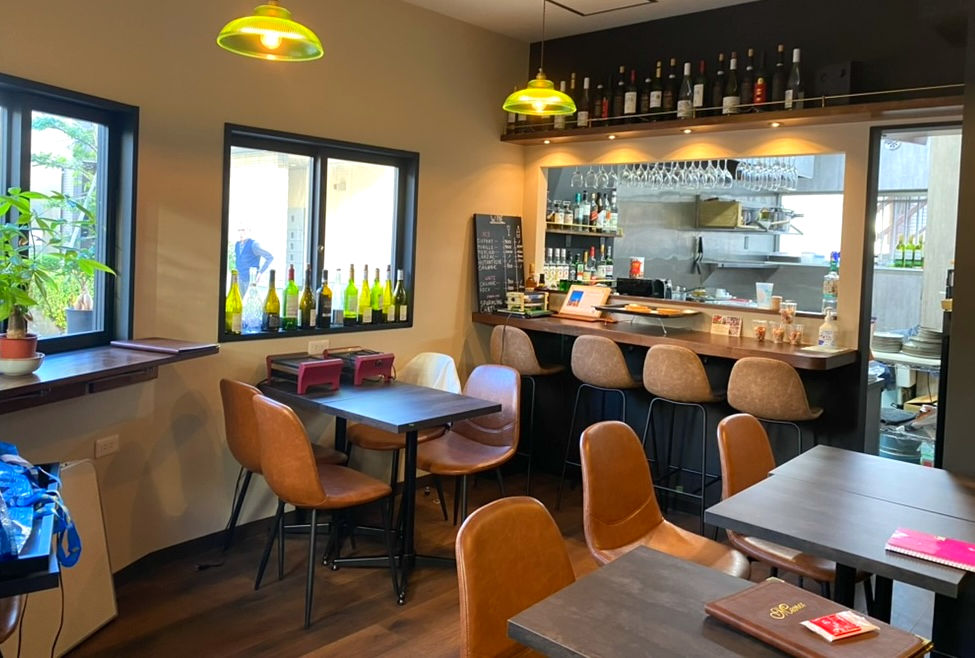
The renovation began in December 2024. A construction company in Tokyo handled electricity and wallpaper and “had an interior designer,” but Yoann, trained as one himself, had clear preferences: “I had a very clear idea of the decoration. I wanted something that reflected me, because I knew I’d spend more time here than at home. What she proposed probably would have been fine, but it wasn’t really my style. […] It was interesting mixing French and Japanese styles. They’re used to designing izakayas or ramen shops. A place like this — with leather bench seating, a black wall, another very light wall, dim lighting — that’s not common. For example, they wanted to install three rows of spotlights, but I wanted soft lighting.”
The bench underneath the photo wall — covered with framed pictures of family, friends, and pets — was part of his vision before the colors were even decided: “Even before thinking about colors, I knew I wanted a wall with frames. When I first saw the restaurant, I immediately thought, ‘This is the wall for frames, and the bench will go underneath.’ I always tell my family and friends, ‘You’re in a lot of Japanese people’s phones.’ Because many customers take photos of this wall. They always ask first if it’s okay, and I say yes.”
He had help with the planning from a friend from Bordeaux, his best friend, “whose job is building swimming pools, masonry, and so on. But in winter it rains, so he can’t work, so his job is kind of seasonal.” Yoann offered him the alternative: “Instead of staying home for five months doing nothing, come spend some time in Japan.” The friend stayed for two and a half months. “It was nice having someone close to me because I had just arrived here. It was a big project, and he’s someone who tells you honestly whether something is good or not. Sometimes he told me, ‘Yo, think about it, that’s not a good idea.’ I would get annoyed, but later I’d realize he was right. Sometimes we argued a bit, but it was good friction. In the end, I did what I wanted to do.”
Some of his early ideas survived contact with the Tokyo street, and some did not. The terrace platter, in particular, was a casualty of cultural translation: “When I first started, since it’s a family-style French restaurant and I have a small table outside when the weather is nice, I thought it would be nice — like in France — having a little terrace, someone sitting there with a beer. “ Unfortunately, the summer table outside has gone mostly unused: outdoor dining in the hot, humid Tokyo summer of Nishiogi is just not the thing.
The introvert behind the bar
The image that Bonjour les amis projects to the street — Yoann waving from inside, ready to chat — turns out to contradict the personality he describes. Asked whether building connections quickly is part of his nature, he is firm: “Not at all. […] I’m extremely introverted. That’s why when I was younger, I chose jobs where I didn’t have contact with customers.”
He recalls a turning point at a global retail chain store in Bordeaux, where his manager moved him out of the stockroom over his objections: “She said, ‘Next week you’re going to work on the shop floor.’ I was like, ‘But I’ve never done sales…’ I barely talked to people. In the end, she put me in the sports section. I liked it — it was cool. Then my second experience in sales was at C... as an interior decorator. I had to talk a lot with customers because I made quotes and design projects. And I ended up enjoying it. So when I arrived here it was like a reboot.”
The “reboot” also worked for Nishiogi. Migrating to a new linguistic environment, opening a small business with a face-out-to-the-street disposition, and dealing with a clientele whose first move he could not predict. It was a redo. The role he plays now, gracious and outgoing, was acquired: “Japanese people aren’t like French people, and the age group of my customers isn’t necessarily the type who would come talk to me first. But actually, people who come here are very open. […] People come toward me. I never make the first move. But once someone does, then it’s on.”
The first months he describes as a kind of daily exposure therapy. Pedestrians would pause at the storefront and look in: “At first I felt like an alien. […] People would walk by, look inside. I’d look back but I didn’t do anything. I had just opened and it was my first restaurant, so I was shy. […] Now people still walk by and look inside, but I wave at them. They’re surprised and wave back. Then the next time they pass by, they wave again. Since I opened in February, most of the people who pass here walk by every day. We recognize each other now. So I’d say I’ve become part of the Nishiogi environment.”
The promotion of the restaurant in its first months relied on the same incrementalism. Saikoro, a large izakaya nearby, was where he started: “When I arrived I went to a big izakaya called Saikoro. The staff there were very friendly. They took my restaurant cards and handed them to customers. I met the manager too — he’s really nice. Since my restaurant wasn’t open yet, I didn’t have much to do in the evenings. I wanted to explore Nishiogi, meet people, and promote my restaurant. And the best way to promote it is to go drink at izakayas, meet people, and give them your card.”
The card-distribution circuit overlapped with friendship-making. He met a new best friend in Nishiogi at a bar; the two of them began handing out cards together. She introduced him to other places and other proprietors: “Now everyone more or less knows each other. Everyone is very friendly. There’s no competition. […] Not with me, at least. […] I wouldn’t say people ask for help — it’s very Japanese, they don’t really ask. But we do things together, like events.”
Events like the recycled-glass-walk, twice a year and now scheduled for November 10–13: “People buy a glass, then they go to different participating establishments. For 300 yen they get a drink.” The market on the third Sunday of every month at Nishiogi Asaichi, on Shinmei-dōri, is another node — Yoann sets out a tablecloth and sells quiches: “I started around April or May. […] I just went there with my quiches and didn’t really know how it worked. Now it’s fine — I arrive, set up my little tablecloth with my quiches, and little by little, people know me. They come once and then come back. It’s nice because sometimes customers pass by the restaurant in the morning while I’m packing the quiches — they’re going to the market too — and they say ‘see you later.’“
Quiche Lorraine sells; vegetable quiche outsells it. The selection committee, an association that vets stallholders, keeps the offer varied: “I guess they don’t want fifteen people selling ramen either.”
The matsuri last September was a more abrupt initiation. He was invited to participate in a festival near Hatagaya, by Shibuya, and ended up carrying a mikoshi for an entire afternoon: “Not many people carrying the mikoshi. So I carried it the whole time. I went once to the Kichijoji matsuri, and they carried it for five minutes, put it down, waited half an hour because they were drinking, carried it again for five minutes… But us, we carried it for half an hour at a time. Then a half-hour break, then again. We started around 2 p.m. and finished around 6 p.m. […] My shoulder was destroyed. When it finished they organized a little picnic, and I just lay down on the ground — I thought I was going to die. I was exhausted. And I’m someone who does sports, but that was something else. At the end it was all mental. My only goal was to stay standing and wait for it to finish.”
This year he could not participate — “with the restaurant it’s impossible schedule-wise. My day off is Tuesday and there aren’t many festivals on Tuesday.”

Solo, with regulars
Yoann runs Bonjour les amis alone. Early on, he hired part-time help, but he discovered the pacing of the restaurant did not require it: “At the beginning, I was just a bit scared and stressed. I thought maybe I wouldn’t manage alone. But the flow of customers isn’t like that. It’s rare that everyone arrives at the same time. […] And even when everyone arrives at once, customers understand that I’m alone in the kitchen. They have a drink and wait. It’s very Japanese — they understand. If there’s only one person running the place, you won’t be served in five minutes, especially if you see other customers who arrived before you.”
The day starts early. He opens the windows, turns on music, makes coffee, and reads the street: “I arrive in the morning, open the windows, turn on the music — there’s always music. I make coffee, eat a sweet breakfast, watch the people passing by, look at the weather, and analyze the street traffic. Actually, in the morning, I can already tell whether the day will be good or bad.”
The forecast directs the prep. “If it’s raining and everyone is rushing with umbrellas, I know they won’t stop here. So for lunch I’ll prepare fewer ingredients.” Mastery of the fridge took about three months. Lunch service runs from 11 to 2; the restaurant closes from 2 to 6. During the gap, he goes home, plays video games, and walks the neighborhood “to see if there are things I could buy for the restaurant. For example, I like making chocolate mousse, and nearby I saw they make matcha chocolate. So maybe I’ll make matcha chocolate mousse with pistachios on top.”
He is now exploring side projects to fill the dead hours. One is an Etsy shop reselling kimonos and obi, an idea he carried over from his earlier travel-and-resale habit, now operating under his company name Kalasutsuki as “Kimono Retro.” Another is an Airbnb experience aimed mostly at French visitors that would combine a meet-up at a nearby retro café — Monozuki, “a very retro place with about 200 clocks inside — you feel like you’re in Alice in Wonderland” — with a walking tour of antique and artisan shops, ending with a drink at an izakaya. The Airbnb application, at the time of the interview, had been “under verification” for two weeks.
Dinner service is unpredictable in the way that small-restaurant dinner service is everywhere unpredictable, but with local twists: “Lunch — on average maybe — sometimes I have none, sometimes maybe five. Dinner is different. Dinner is really funny. You know, on Saturday night you expect a lot of people, and in the end maybe two couples show up. But on Sunday night, when you think people have work the next day, suddenly two couples come, then two more couples, then a group of four, and suddenly the restaurant is full. You’re like, ‘What the hell, it’s Sunday night.’ Normally, you expect it to be calm, but instead, you’re running everywhere. I can never predict it.”
The clientele profile has stabilized into a clear shape: roughly 95 percent Japanese; among the non-Japanese, mostly French (most of them friends he met in the neighborhood), with a few British and American customers. About 90 percent of his customers can speak English well, around 5 percent speak French, and 5 percent speak only Japanese. Age skews 40 to 60 — couples, women alone for lunch — with very little business from the 20–30 cohort. About half the regulars have crossed the line from customer to friend: “It’s kind of 50/50. Fifty percent are customers, and fifty percent are people I met elsewhere who sometimes come here to see me, chat, have a drink, etc.”
The arithmetic on feedback platforms is a sub-anecdote of the small-restaurant economy. Tabelog is particularly frustrating because its average rating is much lower than other platforms: “When I asked Tabelog about it, they said the rating isn’t just the score customers give you. It’s calculated based on various factors related to the reviewers themselves — like how many reviews they’ve written before, the number of good or bad reviews they’ve given… They don’t really want to tell you the exact formula.”
Instagram is a different story. “In Nishiogikubo, Instagram is number one. Even people in their 60s use it a lot.” His customers, many of them retired, have the platform habit of a much younger demographic: “People here love taking photos of their food. When I serve lunch they almost always take a picture and ask if they can post it on Instagram. Many of them are 50 or 60 years old. Retired people here like showing where they ate that day. They go to restaurants every day, take photos, and post them.”
He uses the same channel — stories, posts, a daily countdown the week before an event — to promote video game nights, which he has been running roughly monthly. The most recent was thinned by a scheduling mistake: “Two days before the event, I realized I had the wrong date and had to change it. […] So only six people came. Last time there were about ten.” A future iteration of the same idea is a Franco-Japanese conversational evening, after several customers told him they were learning or trying to maintain French and looking for people to practice with. The matchmaking has occasionally extended beyond language: one Japanese-French regular and another single French male customer, both introduced by Yoann, have been a couple since around May.
The most affecting parts of his daily texture are the small encounters that have accumulated with people on the street, almost without his noticing, into a sense of belonging. The ritual greeting from a woman who lives at the nursing home next door are an example: “There’s also a little grandmother from the nursing home next door. She’s always in a wheelchair. Every time she sees me she waves a lot, even from far away. Sometimes the staff pushing her wheelchair even opens the door so she can wave to me.... That’s why I don’t want to leave Nishiogi. When people ask if I live in Tokyo, I say no — I live in Nishiogi. Nishiogi is Nishiogi. You can go to Ogikubo, Kichijoji, Asagaya — but the atmosphere isn’t the same.”
Other moments arrive unsolicited. A customer he had been chatting with during a family meal once left briefly and came back with two bottles — “He gave them to me and said, ‘Drink them without me.’“ A regular customer once knocked on the door after closing because she had bought bentos at a local festival and knew he had been working straight through: “I was starving after a long day and too tired to go get food. A regular customer walked by — there was a festival that day — and she had bought bentos. She opened the door and said, ‘Here, this is for you.’ It was perfect timing. I was so hungry. She was like an angel.”
There are also customers whose entry into conversation requires more patience. One man arrived without a greeting, sat down, and only opened up when asked, gently, whether he was from Nishiogi. By the end of the meal, they had talked the whole time. “Maybe he had a bad day, or maybe he wasn’t sure if he could talk to me since I’m French.” It is Yoann who functions as the link between solo customers and tables, Pairs, and groups; he leaves alone unless they pull him in. “If someone comes alone, I talk to them. But if two couples come, I won’t talk much because maybe they want privacy. But if I’m already talking with one customer and another one joins the conversation, then we all talk together.”

Spontaneity, soup, and the question of fusion
If the menu is anchored in family recipes, the seasonal additions and one-off dishes lean toward improvisation. The chocolate mousse, for instance, appeared on the November menu after a quiet trial: “I’ve been making chocolate mousse for a while. […] One day I made some but I made too much. I knew I wouldn’t eat it all myself, so I wrote ‘chocolate mousse’ on the chalkboard and offered it to customers. Every time they said yes. So I kept making it.”
In the summer, he experimented with edamame. Asked whether his cold edamame-mint soup represented a deliberate fusion gesture, he is unromantic: “Actually, I just had edamame and didn’t know what to do with them. I thought if I add cream, it would be edamame soup, but edamame has a mild flavor. So I added mint and a few other things. And in the end, it was really good.”
Cold, the soup worked; hot, it did not. A separate experiment with peas was a failure — too sweet. An unidentified citrus fruit appeared one day in the basket of his bicycle outside an izakaya: “I didn’t know what it was, so I looked it up online, and it turned out to be some kind of Japanese lemon. […] No, [not yuzu] — something else. Even Japanese people didn’t know what it was. I had to use Google image search. […] I made tea with some of it and used the rest in mojitos.”
Asked whether this might count as inventiveness, he resists the framing: “Not really. But someone gave me that fruit, and I didn’t want to waste it or let it rot. It stayed there for two days staring at me, so I told it, ‘Alright, I’ll use you.’ Otherwise, I would have just made juice.”
The improvisational habits and the family-recipe core sit comfortably alongside each other. The next additions to the menu, alongside the chocolate mousse, will be gratin dauphinois and a vegetable soup whose ingredients he has not yet decided. Fish has been excluded for now, on practical grounds: “If I prepare something like fish during the week and I don’t sell it the same day, I can’t really do much with it the next day.” A salmon en papillote — “frozen salmon fillets. Anyway, most fish are frozen when they’re caught. Maybe a salmon fillet in foil, with white wine, shallots, thyme, bay leaf…” — is being considered for later.
Wine, not whiskey, defines the alcohol economy of the restaurant, and the alcohol economy carries the margins. (“I sell whiskey, but maybe one highball every two months. Wine, on the other hand…”) Customers occasionally come simply to drink. “Someone asked if they could just drink. I said of course. You can just drink, or even just have a coffee. No problem.”

“This place is my home”
The future bar — Yoann’s eventual second project — is a horizon that recedes pleasantly as the restaurant absorbs his attention. “If you asked me, ‘If you had a certain amount of money tomorrow, what would you do?’ I’d say open a bar. But right now the focus is on the restaurant. I’m fully focused on it because there are still many things to implement — events I want to organize. […] Once the restaurant is really well established, maybe in 10 or 15 years, if we have the means, instead of buying a sports car, we’ll open a bar.”
Then, after a pause: “And maybe after that, the sports car.” The current priorities are slower and more relational: “building the clientele — making more friends and regular customers.” Asked whether the restaurant has allowed him to thrive in Japan, his answer is uncomplicated: “Definitely. […] Yes. And I gained confidence. This place is my home. When someone comes in, I say, ‘Hello, sit here,’ like they’re at my place.”
A French speaker would call this chez moi, at home, in the affective sense. The restaurant is a clubhouse for the curious and a site for a casual sociability that a corner location quietly accumulates. In a neighborhood famous for its retro atmosphere and its dense weave of small restaurants, antique shops, and artisans, Bonjour les amis has, in less than a year, settled into the rhythm of a regular. Its proprietor, who does not yet speak Japanese fluently but would prefer to (“Ideally I’d like to speak only Japanese”), waves at his pedestrians, photographs his quiches, and answers, when asked where he lives in Tokyo, that he does not live in Tokyo. He lives in Nishiogi. (James Farrer and Cloé Pipa-Despres, June 25, 2026, interview, October 27, 2025. Copyright James Farrer, all rights reserved)


