Regional Toyama Cuisine in a Nishiogi Third Place
Updated: Dec 25, 2025

Nishi-Ogikubo is famous for independent izakayas, each attracting customers with its own style of service, cuisine, and (over time) its own unique community of regulars. With price inflation and a limited pool of customers, competing on price and volume is rarely the best option. Something special has to be on offer. One strategy that has emerged in Nishoigi is offering a refined version of regional Japanese cuisines that are not so common in Tokyo neighborhoods. We have reported on a couple of such places, such as Yukitora, now closed, that specialized in the cuisine of Fukui Prefecture. Other places specialize in products from particular regions, such as the izakaya Sensu that specializes in fish from the island of Kōzu-shima in the Izu Island chain, or the Italian trattoria Dara that specializes in products from Toyama cooked the Italian way. An exemplar of a restaurant that does both is the izakaya Kantoyama, 300 meters south of Nishi-Ogikubo, specializing in both the cuisine and products from Toyama Prefecture.
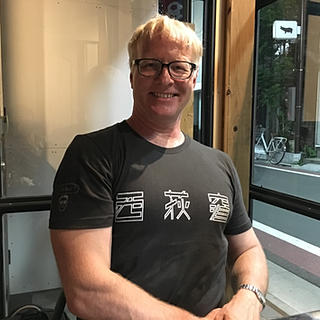
At the helm of this establishment, which offers seafood from the Hokuriku region, primarily Toyama, and a selection of rare, carefully chosen regional sake, is the owner, Nishida Kan (called Kan-san by his customers). His devotion to Toyama foodways and the meticulous work he performs from behind the counter might at first glance suggest the typical career journey from the province to the capital. However, the path he has taken is nothing like the conventional restaurant apprenticeships and rural-to-urban migration patterns that would have been common in Japan’s past. Rather, his culinary career surprisingly began outside the kitchen in corporate gastronomy in Tokyo. From there, his path took a dramatic turn when his company experienced a major setback and bankruptcy, which led him to consider picking up a kitchen knife. The foundation of his cooking was built during an intense year and a half of training in Toyama, forged through encounters with his master and local fishermen. Why did he leap from a stable career into the world of cooking? How did his experience as a consultant add depth to his culinary creations? And what other passions, beyond "Toyama," are encapsulated in his restaurant's name?

From Consultant to Bankruptcy and a Renewed Determination
At first, we asked the same question that many customers start with: "Kan, are you originally from Toyama?" He quietly shakes his head. "No, I'm from Tokyo. I was born in Osaka, and my family moved to Tokyo when I was in the fourth grade due to my father's work transfer. I've been in Tokyo ever since," he explains. Toyama, his culinary identity, is not his birthplace but rather a place of fateful encounter. Moreover, his career began not as a chef, but as a consultant supporting restaurant management from behind the scenes.
"It all started when I was doing something like consulting for izakayas in Tokyo," he begins. "My focus was on improving numbers rather than the cooking itself—things like cutting food costs, reducing labor expenses, adjusting the FL (Food & Labor) ratio, and developing new menu items. I did that for about six to seven years. The company I originally joined was what you would call a startup today, but it was acquired. I continued working as a consultant for an izakaya chain with 24 locations in a sort of merger. I was handling FL improvements, product development, and staff training, but then the company went bankrupt. During the earthquake that happened in 2011, when we had the rolling blackouts, the izakaya business faltered, and our company was swept up in that wave and went under... That bankruptcy became a catalyst. I started getting offers from various places and thought maybe I should study cooking properly. That's when I really started. So, I learned to cook professionally quite late in life".
Losing his company meant a career reset. It was also the beginning of his first true, sincere engagement with cooking as an embodied practice. After the company's collapse, he spent about a year working part-time at a friend's restaurant, during which an opportunity to go to Toyama arose.

His time in Toyama lasted only a year and a half. However, this period became the most crucial and intense chapter of his culinary career. The establishment where he trained was "Kaifutei(海風亭)" in the city of Uozu, a venerable Japanese restaurant with a history spanning nearly 100 years. "The master who taught me was the fourth-generation owner, so it has a very long history. I believe this is where I learned the most."
Although he had worked in an izakaya, his role was strictly as a consultant. Nevertheless, he says he didn't feel much awkwardness standing in the kitchen. "At its core, the work is the same. Seventy percent is preparation. You come in early in the morning to do the prep work. During service hours, since I was in the back of the house when I was learning, I would wash up or plate the dishes. The head chef would come to check and say something like, 'Okay, do it this way.' So, I definitely wasn't in the spotlight in Toyama. It was a lot of endless prep work."
After his company went bankrupt, Kan spent about a year working part-time at an izakaya run by a friend. He notes there was a difference in the approach to ingredients between that experience and his time at the long-established Japanese restaurant in Toyama. "There was a definite difference between a casual izakaya and a proper restaurant in how ingredients were handled. Take dashi, for instance. I make mine with kombu, but at izakaya, they often use dashi packs. The packs are cheaper, you see. You can lower costs, so that's what everyone uses. But the flavor is just completely different".
Discovering these sources of authentic flavor ignited a passion to learn more about cuisine. "Things like that made cooking more and more enjoyable for me. I started researching on my own and dining out at various places. From there, I gradually settled into the style I have now at Kantoyama.”
His learning didn't just take place in the kitchen. In addition to his master's teachings, he had another great mentor: the "fishermen" who work in the Toyama Sea. "I got to know some fishermen, and I learned that the fish in Toyama are a bit unusual; there are many strange kinds," he says.

Many of the varieties of fish from Toyama, he describes, are rarely seen in Tokyo. "There are white shrimp, for example, and at my restaurant, we serve 'kurozukuri' (fermented squid innards). We do a lot of cured items, like vinegar-cured fish. A little while ago, we had horse-head tilefish. You probably don't hear about that much in Tokyo, do you? And the flathead flounder... yes, you can't really catch that around here (Tokyo)".
Encountering these unique fish vastly expanded his culinary world. To deliver these precious ingredients to his customers at peak freshness, he forged his own direct sourcing routes. "Normally, high-quality fish caught in Toyama goes to the Toyosu Market first, and then the wholesalers there sell it to retailers. But I don't do that. I source directly from Uozu in Toyama Prefecture".
And it's not just fish that he sources directly. "The same goes for sake. I currently source from three suppliers I met over there—one in Ishikawa Prefecture, one in Toyama City, and one in Uozu City. I choose from them depending on my needs. Friends I made there took me to various places, where I spoke with the owners and got introductions. I found the best ones through that network. I've probably been working with them for over a decade now".
This direct connection, bypassing the market, is the lifeline of Kantoyama's flavor. The relationships of trust he has built over more than a decade with his master, fishermen, and suppliers continue to deliver the finest ingredients to his restaurant today.

The Kantoyama Way —"More Than an Izakaya, Less Than a Kappo"
After an intense year and a half in Toyama, he returned to Tokyo. He then spent four years honing his skills as a hired head chef at a Toyama cuisine restaurant in Itabashi. "I was doing purely Toyama cuisine."
He was entrusted with menu development, dedicating his days to conveying the essence of Toyama's culinary arts to Tokyo diners. The ingredientswere sent directly from the contacts Kan had made during his time in Toyama. However, the Toyama dishes he served then were different from what he offers at Kantoyama today; he describes them as "orthodox."
"It was things like kurozukuri, firefly squid pickled in soy sauce, and the famous white shrimp from Toyama,” he explained. “The things everyone knows—what people typically imagine when they think of Toyama cuisine. I wasn't serving dishes like the red sole that I do now at Kantoyama."
However, that restaurant, too, was swept up in the COVID pandemic and was forced to close. "The place in Itabashi... it didn't exactly go under, but it was the impact of COVID. We were in a situation where we had no choice but to close. We had several employees, and that was the final decision. The pandemic's effect was... immense. Suddenly, all the customers disappeared. There was talk of subsidies and what not, but in the end, it wasn't enough. We could have tried to stay open, and the owner was sort of like, 'Well, you can if you want,' but my home was a bit far from Itabashi. I used to commute by bicycle. I just felt... tired. I'd been there for four years, and I thought, ‘That's good enough.’”
The next stage he chose was Nishi-Ogikubo, the town where he had lived for 12 years. It was there that he finally opened his own restaurant, Kantoyama. The concept he established for his place is uniquely his own. "Well, it's a bit more relaxed than formal cuisine. In my own words, it's somewhere 'more than an izakaya, but less than a kappo (a traditional, high-end restaurant with counter seating)'.”

Kantoyama lacks the stiffness of a high-end kappo, yet within its casual, izakaya-like atmosphere, meticulous craftsmanship and dedication are evident. This balance is the essence of his personal style, and part of the secret lies in his unconventional career path. "I think my experience in development during my consulting days plays a huge role,” he said. “I've worked with a wide variety of ingredients, and having been involved in that development process, I can intuitively understand things like, 'If I combine this and this, this is what will happen.' I have a certain foundation from my past experiences, and from there it's a matter of adding or subtracting something. So, I don't... I don't really think about it too deeply. It's more like, I have a base recipe, and then I look at the vegetables and fish I've sourced for the day and think, 'Ah, maybe I should do it this way today.' The intuitive part is probably the biggest factor".
For example, his original dish, "Amberjack Rare Katsu," was born from exactly that intuition. His skills are not limited to seafood; they are also evident in his meat dishes. "Toyama has meat products, but they're quite expensive,” he said. “So, for my meat, I use products from outside Toyama. I didn't even use meat at first, but it turned out that many customers wanted to eat meat," he laughs. "For the meat, I prepare it in a Toyama style, by curing Wagyu beef with kombu. This infuses it with the umami of the kombu, and then I sear it with a bit of Toyama soy sauce before serving".

Applying a seafood technique to meat—such flexible thinking is a gift from his wide-ranging experience.” Furthermore, the menu at Kantoyama is constantly evolving. "The menu changes significantly once every two months. And because the fish I source changes, I reprint the menu every day. This week, for example, I already know what fish I'll be getting. Pike conger will be coming in, so I'll probably add two or three dishes featuring it.”
"I sometimes think about trying something new,” he said. “I try to do something different each year; it's no fun doing the same thing repeatedly. I must be creative so that the customers who visit can enjoy themselves. I have this sense that I must not let my customers get bored. If they start to think, 'He's always serving the same thing,' they might decide, 'Well, I don't have to come here for that,' and that wouldn't be good.”
His relentless quest to keep customers engaged is fueled by the knowledge he voraciously absorbs from the internet and books. "Of course, I use them all the time. I read a lot of books myself. I buy quite a few different kinds. I'll see something and think, 'Oh, there's this way of doing it, too.' I'm constantly studying when it comes to cooking.”
At the same time, he cherishes his classic dishes, ensuring that customers always have something familiar to come back to. "Our signature dishes are the Amberjack Rare Katsu, the seasonal Shira-ae (mashed tofu salad), and the Takikomi Gohan (seasoned steamed rice). These are always on the menu. The amberjack might change to yellowtail depending on the season, but it's a staple. A classic.”
The shira-ae also changes with the seasons; a little while ago, it was made with strawberries, and now he uses oranges. This skillful balance of constancy and variation is what keeps his regular customers coming back for more.

The Two Pillars Supporting His Commitment to Ingredients
Ingredients, and not just those specially sourced from Toyoma, are the heart of his cuisine. His dedication is evident in everything from his daily vegetable selection to the fish sourcing built on long-standing relationships of trust. "I go to Kodaka Shoten and Chisan Marche to buy my vegetables. Chisan Marche's selection changes with the seasons, and they have great, morning-picked produce. At Kodaka Shoten, you can also place orders. If I tell them, 'I want this kind of vegetable,' they'll source it for me.”
His search for ingredients is not limited to nearby shops. "I also go mountain climbing, so on my way back down, I'll stop at local farm stands and buy vegetables. My wife is from Minami-Alps City, so when we visit that area, the roadside stations sell a lot of really good produce, and I often buy from there".
When sourcing vegetables, he says the most important thing is to see it himself. "I absolutely have to see the vegetables myself,” he said. “The quality difference between good and bad produce can be huge. If I don't check them myself, I can't risk receiving a delivery of poor-quality items. It takes a little effort and time, but I think it's better to go myself."
While he trusts his own eyes for selecting vegetables, his long-standing relationships guarantee the quality of his fish supply." If, by some chance, I receive fish that isn't up to par, I call them right away. But our relationship is so long that it rarely happens. We're on good terms, so even if I call, they'll just say, 'Sorry about that,' and then the next time, they might throw in a little extra fish I didn't order as an apology," he laughs. "We've had this relationship for over ten years.”
The two pillars of his approach could be summarized in the parlance of “trust and verify.” This is what makes his commitment to ingredients possible.

Supported by People and Connections in Nishiogi
Kan started living in Nishiogi in his late twenties. "I used to live in Koenji, and we were thinking about moving. We just happened to find a place in Nishiogi and moved here," he explains.
He continued to favor Nishiogi for reasons beyond simply living there. "Unlike other neighborhoods, Nishiogi has very few chain stores. I thought it was an unusual place. I've been to many restaurants, and each one has a strong, unique character. It's a really interesting community.”
Nishiogi’s unique atmosphere resonated with his own sensibilities. Starting in 2022, after the pandemic restrictions eased, he gained experience running a "magari” (間借り/ shared or temporary) space in Nishiogi. It was then that he had a fateful encounter with his current location.
"In November 2023... the previous owner of this place and I were drinking buddies. He's about 70 years old and was talking about retiring. So, I told him, 'I want to open my restaurant here,' and asked him to hand it over. That was in November 2023. Renovation started in March 2024, and we opened on April 3.”
Supporting him from the very beginning were the customers he met during the difficult times of the pandemic. Unable to operate a full-scale restaurant, he had been selling take-out bento boxes from a small pop-up shop in Nishiogi. "I sold Toyama-style bento boxes, focusing on fish dishes like saikyo-zuke (miso-marinated grilled fish). The shop was less than half the size of this one (Kantoyama). It was a tiny place, and the stove was just a home-use model. So, the things I could make and the space I had were very limited, which was tough at first. But, thankfully, I was selling around 40 bento boxes a day. I'm very grateful for that.”
The bento boxes gained a reputation, and the number of fans of his cooking grew steadily. Those same customers are the ones who form the foundation of his restaurant today. "Even now, about 70 percent of my customers are people who have been with me since before,” Kan said. “The remaining 30 percent are new customers I've gained since opening here".
The restaurant's regulars are primarily in their late 30s and older—adults with a keen interest in food who live in Nishi-Ogikubo and the surrounding areas. "Many of them are also very knowledgeable about sake," he adds.
Conversations with them across the counter are one of the unique pleasures of his restaurant. The main topic of discussion is, naturally, Nishiogi. "Yes, very often. We talk about which restaurants they've been to, or they'll tell me about a great place they found. I also have customers who have lived in Nishiogi their whole lives, and I get to hear stories about the town right after the war. It makes me think, 'Wow, the town used to be like that?' It's fascinating.”
His description of the residents of Nishi-Ogikubo is quite intriguing. "The people of Nishi have such a strong love for the town, it's almost intimidating. It might sound strange, but I feel the same way—when I come back to Nishiogi. I feel a great sense of relief. So, even if I think about drinking elsewhere, like in Kichijoji, if we decide to go for another round, everyone always comes back to Nishiogi.”
His connection with regular customers extends beyond business hours. "If a customer invites me to an event they're hosting, I'll sometimes go. But since I have prep work to do, I'll usually just bring a dish as a contribution, have two or three drinks, and then head back. This year, they had a cherry blossom viewing party at Zenpukuji Park and invited me, so I brought some chirashi sushi.... Sometimes, customers will call me and say, 'We're drinking at such-and-such place, why don't you join us if you have time?' and we'll go for a drink together. That's after work, of course. We usually end up at a bar. I'll finish work around 11:30 PM or midnight, get a message saying, 'We're here now,' and I'll reply, 'Okay, I'll stop by for a bit'.”
Kantoyama is clearly developing a community of regulars, including many well-off and somewhat older people from the neighborhood. We also asked Kan, who once supported izakaya management as a consultant, about the difficulties of running a business. "The hardest part is that you can't predict customer traffic. Weekends are very busy, but weekdays can be completely dead. And since I use fresh fish, it eventually goes bad. So, our staff meals are always fish,” he said ruefully. “All fish".

The Chef's True Self: Two Souls of Sake and Mountains
Kan's passion extends beyond cooking. Two other elements of his personal life are also hinted at in the name of the restaurant: "sake" and "mountains.” These two passions also give a very personal character to his business and to his conversations with customers.
He is a self-professed lover of sake, and his affection is clearly reflected in the restaurant's impressive lineup. A particularly symbolic item is the rare Toyama’s sake, "Kachikoma.” "Many of the sakes I serve are quite hard to find, even in Tokyo. A rare one is Kachikoma. You can't even get it in Toyama. Only five people are making Kachikoma, so the production volume is extremely small. Despite that, it's incredibly delicious. You can feel the care and dedication that goes into making it. How can I put it? It's smooth like water, but you can still taste the flavor of the rice. I source it from the owner of a retail shop I was introduced to when I was working in Toyama.”
His connections for sourcing rare sake are not limited to the relationships he built in Toyama. "Some have been introduced to me by my regular customers. For example, this one. It's called Ubusuna. It's a sake from Kumamoto. Yes, it's written with the characters for 'birth' and 'earth' and read as 'Ubusuna.' For this one, a regular customer used their connections to source and buy it for me".
He says many regulars visit the restaurant just for a glass of this sake. However, he never chooses a sake based on rarity alone. Even if a customer requests it, he refrains from thoughtlessly keeping the same sake in stock. "Even if someone says, 'This was delicious, get it again,' I won't. What I mean by that is, that's not the only delicious sake out there".

He always wants to propose new and delicious discoveries. This desire is why his sake list is updated at the astonishing pace of once a week. "Yes, I reprint the entire list about once a week. So, everyone looks forward to trying something new. It's a lot of work, though, searching for new sakes".
Recently, he has been particularly passionate about "craft sake" made by the younger generation. These sakes often have fruit names on the label, making them more approachable for young people."They're part of what's called the 'Concept Workers Selection,' a series of sakes based on the idea of drinking with your senses rather than your head, to make it more accessible to young people. It's made by a younger generation. Craft sake tends to be easier to drink than traditional sake, so I think it's a good way to reintroduce it to young people who have drifted away from it. I buy from this series often, whenever I see it. But not many places carry it. I recommend it to customers who seem interested, and they usually order it.” This is his way of supporting the future of sake.
And then there is his other hobby: mountain climbing. "I go once or twice a month. Sometimes with my wife, and sometimes alone".
This is not just hiking; it's serious mountaineering that includes overnight tent stays. "Yes, I do tent camping and also stay in mountain huts. It's fascinating. A really wonderful experience.”
This passion for the mountains is the key that unlocks the final secret hidden in the name "Kantoyama." "That's right," Kan said. "It's a play on Toyama and 'to YAMA' (to the mountains). It includes the meaning of going to the mountains.”
His own name, "Kan," his culinary roots, "Toyama," and his life's passion, "to the mountains"—three meanings are woven into the name of his restaurant. For him, the mountains are more than just a hobby. They are a vital place for him to hone his sensibilities as a chef. "When you're cooking all the time, you don't get many opportunities to be in nature. Just being in nature helps sharpen your senses. It gives me inspiration.”

With that, Kan shows us a small, bottle-like object. “At the summit, you can warm this in hot water and drink it as hot sake. There's also this one called 'Hiker's GIN,' which comes in a syrup-like container. Gin usually comes in heavy glass bottles, right? But this is lightweight. You can buy it. It's a gin for the mountains and a sake for the mountains.... Many people also bring whiskey in small flasks. The higher the alcohol content, the faster you can get to sleep. With something like beer, you'd have to drink several cans. When you're staying overnight on a mountain, it's better to get a little drunk and fall asleep quickly because you have to wake up early the next morning. That's why people bring high-proof alcohol—it's lighter and more compact.”
Mountains and sake—the keywords that define Kan are interconnected in this way. When we mentioned that he seems like he might one day produce his own alcoholic beverages for mountaineering, he shared a dream that lies even further ahead. "Yes, I'd like to do that. But what I'm most interested in right now is dehydrated food. Something delicious that you can take into the mountains. Not just alpha rice (freeze-dried rice), but something more. I think it would be interesting if I could create that with Japanese cuisine. For example, a dehydrated nikujaga-gohan (meat and potato stew with rice)".
As a chef and a mountaineer, a new challenge that only he can undertake is quietly beginning to take shape. The plan for mountaineering foods may or may not come to fruition, but it shows how a restaurateur keeps his personal interests alive by interacting with his culinary work.
(James Farrer and Sakura Yajima, Dec. 23, 2025, interview by James Farrer Sakura Yajima on June 25, 2025, copyright by James Farrer, all rights reserved).


